Bordeaux Bottle
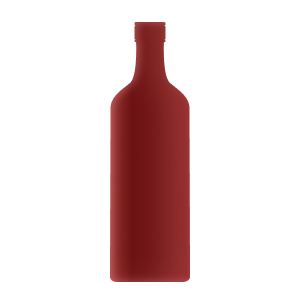
Taller, relatively straight-sided, and distinguished by pronounced shoulders. Common for Cabernet Sauvignon, Merlot, and many Bordeaux-style wines.
From standard 750 mL Bordeaux bottles to Champagne, magnums and oversized formats, bottle dimensions influence every wine rack and cellar layout. Compare typical heights, diameters and capacities before choosing the right storage system.
From a single-serving split to a celebratory magnum, wine bottles come in a range of formats. Use this quick-reference chart to compare common capacities and approximate physical dimensions before choosing wine racks, cabinetry, or cellar storage.
The standard bottle is the starting point for most wine rack layouts. Its exact dimensions depend on whether it is a Bordeaux, Burgundy, Champagne, or another bottle shape.
| Bottle Format | Capacity | Approx. Height | Approx. Diameter | 750 mL Equivalents |
|---|---|---|---|---|
| Split / Piccolo | 187–200 mL | 7–8.5 in | 2–2.5 in | About ¼ |
| Half / Demi | 375 mL | 9–10.5 in | 2.4–2.9 in | ½ |
| Standard Most common | 750 mL | 11.5–13 in | 2.9–3.5 in | 1 |
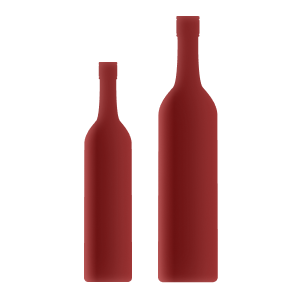
| Magnum | 1.5 L | 13.5–15.5 in | 3.8–4.5 in | 2 |
| Double Magnum* | 3 L | 17–19 in | 4.5–5.5 in | 4 |
| Jeroboam* | 3 L or 4.5 L | Varies | Varies | 4 or 6 |
| Imperial / Methuselah* | 6 L | Varies | Varies | 8 |
| Salmanazar | 9 L | Varies | Varies | 12 |
| Balthazar | 12 L | Varies | Varies | 16 |
| Nebuchadnezzar | 15 L | Varies | Varies | 20 |
03 / Understanding Bottle Shapes
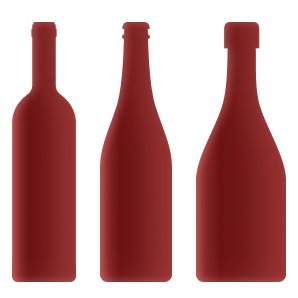
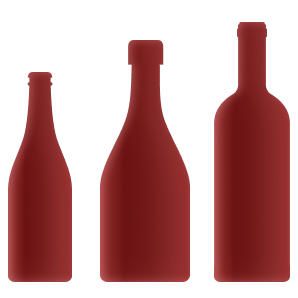
Bottle capacity doesn't tell the whole story. The three common 750 mL bottle shapes below have different shoulders and diameters—an important detail when selecting individual bottle openings, display rows, and wine cellar racking.
Taller, relatively straight-sided, and distinguished by pronounced shoulders. Common for Cabernet Sauvignon, Merlot, and many Bordeaux-style wines.
Recognizable by its gently sloping shoulders and broader body. Frequently used for Pinot Noir, Chardonnay, and Rhône-style wines.
Usually thicker and wider to withstand internal pressure, with sloping shoulders and a deeper punt. Often needs extra clearance in a rack.
Measurement note: These are approximate planning ranges for common 750 mL bottles, not universal manufacturing standards. Bottle dimensions vary by winery, glass supplier, region, and specialty design. Measure your largest bottles and verify the rack manufacturer's opening dimensions before ordering.
A rack that comfortably holds a standard Bordeaux bottle may be tight for wider Burgundy or Champagne bottles. For mixed collections, plan for the largest diameter you'll store and consider flexible bulk storage for unusually shaped bottles.
Explore Wine Cubes & Flexible Storage →04 / STORAGE & RACK COMPATIBILITY
Bottle capacity tells you how much wine is inside—not whether the bottle will fit a particular rack. The maximum bottle diameter, bottle length, and spacing between supports are what matter when choosing storage for Bordeaux, Burgundy, Champagne, magnums, and mixed collections.
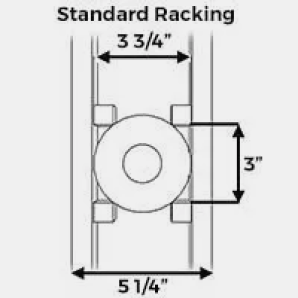
Traditional wooden racks keep each bottle in its own compartment. Check the clear opening width and depth before assuming wider Burgundy or Champagne bottles will fit a rack designed around standard Bordeaux bottles.
Explore Wooden Wine Racks →Angled display rows present the label and can add visual interest to a cellar. Verify the bottle cradle, support points, and available clearance—especially for broad-shouldered or oversized bottles.
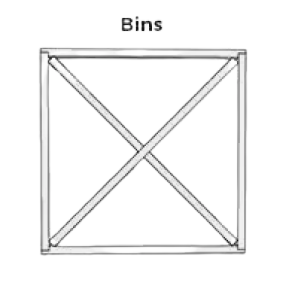
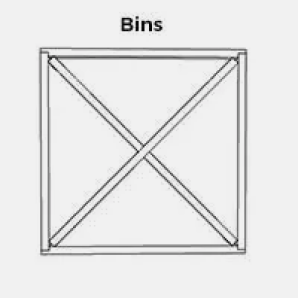
Explore Prestige Wine Racks →Open compartments are useful for grouping bottles of different shapes without relying on identical individual openings. Check usable interior dimensions and how bottles will be stacked and supported.
Explore Wine Cubes →Metal display systems present labels outward and make excellent use of wall space. Compatibility varies by rack model, bottle diameter, depth, and mounting configuration; some systems offer dedicated large-format options.
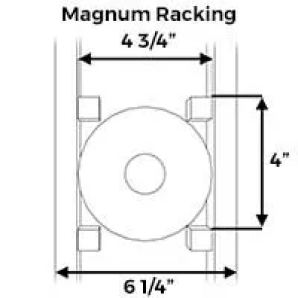
Explore Wall-Mounted Wine Racks →A 1.5 L magnum is not simply a standard bottle with twice the capacity—it is generally wider and may be taller. Double magnums and larger formats need even more planning. Reserve appropriately sized spaces instead of assuming a standard individual-bottle opening will work.
Plan Custom Bottle Storage →Measure your largest bottles, not just your most common ones. Published bottle dimensions are approximate, and rack compatibility depends on the specific product. Always compare actual bottle measurements with the rack's listed specifications before purchasing. For unusual collections, our custom design team can help plan dedicated storage.
Large-format bottles are impressive additions to a collection, but their names can be confusing. These traditional formats are commonly described by the number of standard 750 mL bottles they hold. For storage planning, remember that capacity alone does not determine a bottle's physical dimensions.
Equivalents below use a standard 750 mL bottle as the baseline.
Twice the capacity of a standard bottle.
Also called a Jeroboam in Champagne terminology.
A traditional large Champagne format.
Often called an Imperial for still wine.
A substantial presentation format.
Requires dedicated support and clearance.
An oversized format for special collections.
Naming varies by wine region and producer.
Naming note: Large-format terminology is not fully standardized. In particular, “Jeroboam” can refer to 3 L in Champagne and 4.5 L in Bordeaux. Always confirm the stated volume on the bottle or producer's specifications.
Magnums and oversized bottles may be wider, taller, heavier, or differently shaped than standard 750 mL bottles. An opening designed for everyday Bordeaux bottles may not safely accommodate a larger format.
Measure the actual bottle at its widest point and confirm its full length before choosing storage.
Custom layouts can accommodate mixed bottle sizes without compromising the look or functionality of your cellar.
Bottle capacity tells you how much wine is inside—not how much space the bottle needs. Before choosing individual bottle openings, display rows, or specialty storage, take a few measurements from the bottles you actually plan to store.
Measure from the base of the bottle to the very top, including the neck and closure. This is especially important for upright storage and enclosed cabinetry.
Measure across the broadest part of the bottle body. Burgundy, Champagne, and specialty bottles can be wider than standard Bordeaux-style bottles.
Compare your measurements with the rack's published bottle-size limits or opening dimensions. Allow practical clearance for loading and removing bottles.
Horizontal, angled-display, label-forward, and upright storage use space differently. Confirm the rack supports your bottle shape in its intended orientation.
Imagine two 750 mL bottles: a narrow-shouldered Bordeaux bottle and a broader Champagne bottle. They hold the same amount of wine, but the Champagne bottle may require a wider opening or a different support configuration.
For a mixed collection, measure your widest and tallest bottles rather than designing exclusively around a typical standard bottle.
Actual dimensions vary by producer and glass design. Manufacturer rack specifications should always determine final compatibility.
Bottle capacity tells you how much wine a bottle holds—not necessarily how much space it needs. Here are the most common questions to answer before choosing a wine rack or planning a cellar.
A typical 750 mL wine bottle is approximately 11.5–13 inches tall and about 2.9–3.5 inches in diameter, depending on its shape. These are planning ranges, not guaranteed specifications. Measure the actual bottles you intend to store, especially if your rack has individual openings.
No. Bordeaux, Burgundy, and Champagne-style bottles can all hold 750 mL while having different shoulders, heights, and diameters. Even bottles within the same style can vary by producer. A rack that fits one 750 mL bottle may not accommodate every other 750 mL bottle.
Not always. Many Champagne bottles are wider than typical Bordeaux bottles, so individual-bottle openings can be too narrow. Check the rack's published bottle-diameter allowance and compare it with the widest point of your Champagne bottles before ordering.
A magnum contains 1.5 liters, equivalent to two standard 750 mL bottles. Its outside dimensions vary by bottle design and producer, so there is no single height or diameter that applies to every magnum. For magnum storage, measure your bottles and consider dedicated large-format spaces or flexible bin storage.
A double magnum generally refers to a 3-liter bottle. The name “Jeroboam” can refer to different capacities depending on the wine region and tradition: it is commonly 3 liters in Champagne and 4.5 liters in Bordeaux. Always confirm the volume shown on the bottle rather than relying on the name alone.
Allow enough room for the bottle to slide into and out of the rack without scraping or becoming wedged. The required clearance depends on the rack's design, bottle orientation, and manufacturer specifications; there is no universal allowance that works for every wine rack. Check both the widest diameter and overall length of your bottles.
For a collection with Bordeaux, Burgundy, Champagne, and magnums, consider a combination of individual-bottle storage and more flexible options such as wine cubes, bulk bins, or designated large-format storage. Confirm bottle fit for each rack style before purchase.
Use standard-bottle dimensions as a starting point, but design around the collection you actually own—and the bottles you expect to buy. If you regularly purchase Champagne, Burgundy, magnums, or unusual bottle shapes, include storage specifically suited to those formats.
From individual bottle racks to flexible wine cubes and custom cellar layouts, explore storage solutions that work with the bottles you collect—not just their listed capacity.
Measurements throughout this guide are approximate. Always confirm product-specific rack dimensions and bottle compatibility before ordering.
Wineracks.com
Wineracks.com is a U.S.-based manufacturer and supplier of wine storage systems, specializing in custom wine cellar design, modular wine racks, and climate-controlled storage solutions. With decades of combined industry experience, the company provides both handcrafted wood racks and professional-grade cooling systems for residential and commercial wine storage projects.